

Swelling, pain, discomfort, or irritation around your back teeth or gums can be a sign your wisdom teeth need attention, and possibly removal. Wisdom teeth are usually the last teeth to erupt, typically during the teenage years or early twenties, and by that point there’s often not enough room in the jaw for them to come in properly. Combined with the natural curvature of the jawbone, this frequently causes wisdom teeth to grow in sideways, pushing against healthy teeth, or to only partially break through the gums. The result can be swelling, infection, misalignment, and in some cases cysts or tumors. Since wisdom teeth aren’t needed to eat or speak normally, removing problematic ones is often the simplest path to avoiding these complications.
What Problems Can Wisdom Teeth Cause?
Decay and Infection
Wisdom teeth that only partially erupt through the gums create an ideal environment for bacteria to hide. Because these areas are difficult to reach with normal brushing and flossing, partially erupted wisdom teeth are at higher risk for decay and gum disease. Left untreated, that infection can spread and damage neighboring healthy teeth, gum tissue, and the surrounding bone.
Damage to Neighboring Teeth
Wisdom teeth that grow in at an angle can push directly into the molars next to them, damaging tooth roots and creating crowding that can undo years of orthodontic work. Crowded teeth are also harder to clean effectively, which increases the risk of plaque buildup, decay, and infection throughout that part of the mouth.
Chronic Pain and Discomfort
Impacted wisdom teeth don’t always hurt, but when they do, the pain is often chronic and can interfere with comfortable jaw movement. In some cases, impacted wisdom teeth also lead to painful cysts or persistent gum swelling.
How Do You Know If Your Wisdom Teeth Need to Come Out?
Symptoms like swelling, tenderness, or pain near the back of your jaw are common signs, but not every problematic wisdom tooth causes obvious discomfort right away. Many issues, including impaction and early decay, are only visible on an X-ray. That’s why a dental exam is the most reliable way to know whether your wisdom teeth are developing normally or heading toward a problem.
What Does the Wisdom Teeth Extraction Procedure Involve?
When performed by an experienced provider, wisdom teeth removal is a routine, well-managed procedure. Patients are first given local anesthesia or sedation to ensure a comfortable, pain-free experience. Using specialized tools, the dentist or oral surgeon gently accesses the tooth, sometimes removing a small portion of surrounding bone if needed, then sections and removes the tooth. The site is cleaned and the gum tissue is sutured to support proper healing.
What Does Recovery from Wisdom Teeth Removal Look Like?
Most patients need a few days of rest immediately after surgery, with swelling and soreness gradually improving over that time. A full recovery is generally expected within a few weeks. Your dental team will provide specific aftercare instructions, including guidance on diet, oral hygiene, and pain management, to help the healing process go smoothly.
Should Teens Get a Wisdom Teeth Evaluation Even Without Symptoms?
Yes. Even if wisdom teeth aren’t currently causing pain or visible problems, scheduling a consultation and X-ray for your teen is a good idea. Wisdom teeth issues can develop gradually and are often easier to manage, or avoid altogether, when caught early through routine evaluation.
What Are the Different Types of Wisdom Tooth Impaction?
Not all impacted wisdom teeth present the same way, and understanding the type of impaction helps explain why some cases are more urgent than others. A soft tissue impaction means the tooth has broken through the bone but is still covered by gum tissue, which can trap food and bacteria underneath. A partial bony impaction means the tooth is partly covered by jawbone, making it more difficult to clean and more prone to infection. A full bony impaction means the tooth is entirely encased in bone and hasn’t broken through the gums at all, which sometimes causes pressure on neighboring teeth even without obvious symptoms. Your dentist can determine which type applies to your case using X-rays, which also helps guide the extraction approach.
Can Wisdom Teeth Cause Problems Even If They Aren’t Impacted?
Yes. Even wisdom teeth that erupt fully can cause issues if there isn’t enough room for them in the jaw. Fully erupted wisdom teeth positioned at the very back of the mouth are notoriously difficult to clean thoroughly, since they’re harder to reach with a toothbrush and floss. This makes them more susceptible to cavities and gum disease over time, even without the complications associated with impaction.
Frequently Asked Questions
At what age do wisdom teeth usually need to be evaluated? Most people should have their wisdom teeth evaluated in the mid-to-late teenage years, when the teeth are developing but haven’t fully erupted yet.
Do all wisdom teeth need to be removed? No. Some wisdom teeth erupt fully, align properly, and cause no problems. An exam and X-rays help determine whether extraction is necessary in your specific case.
Is wisdom teeth removal painful? The procedure itself is performed under local anesthesia or sedation, so patients don’t feel pain during removal. Some soreness and swelling during recovery is normal and manageable with aftercare guidance.
How long does recovery from wisdom teeth removal take? Most patients feel significantly better within a few days and are fully recovered within a few weeks, depending on the complexity of the extraction.
What happens if impacted wisdom teeth are left untreated? Untreated impacted wisdom teeth can lead to infection, damage to neighboring teeth, crowding, cysts, and chronic pain.
Can wisdom teeth grow back after removal? No. Once wisdom teeth are extracted, they do not grow back.
Schedule Your Wisdom Teeth Evaluation
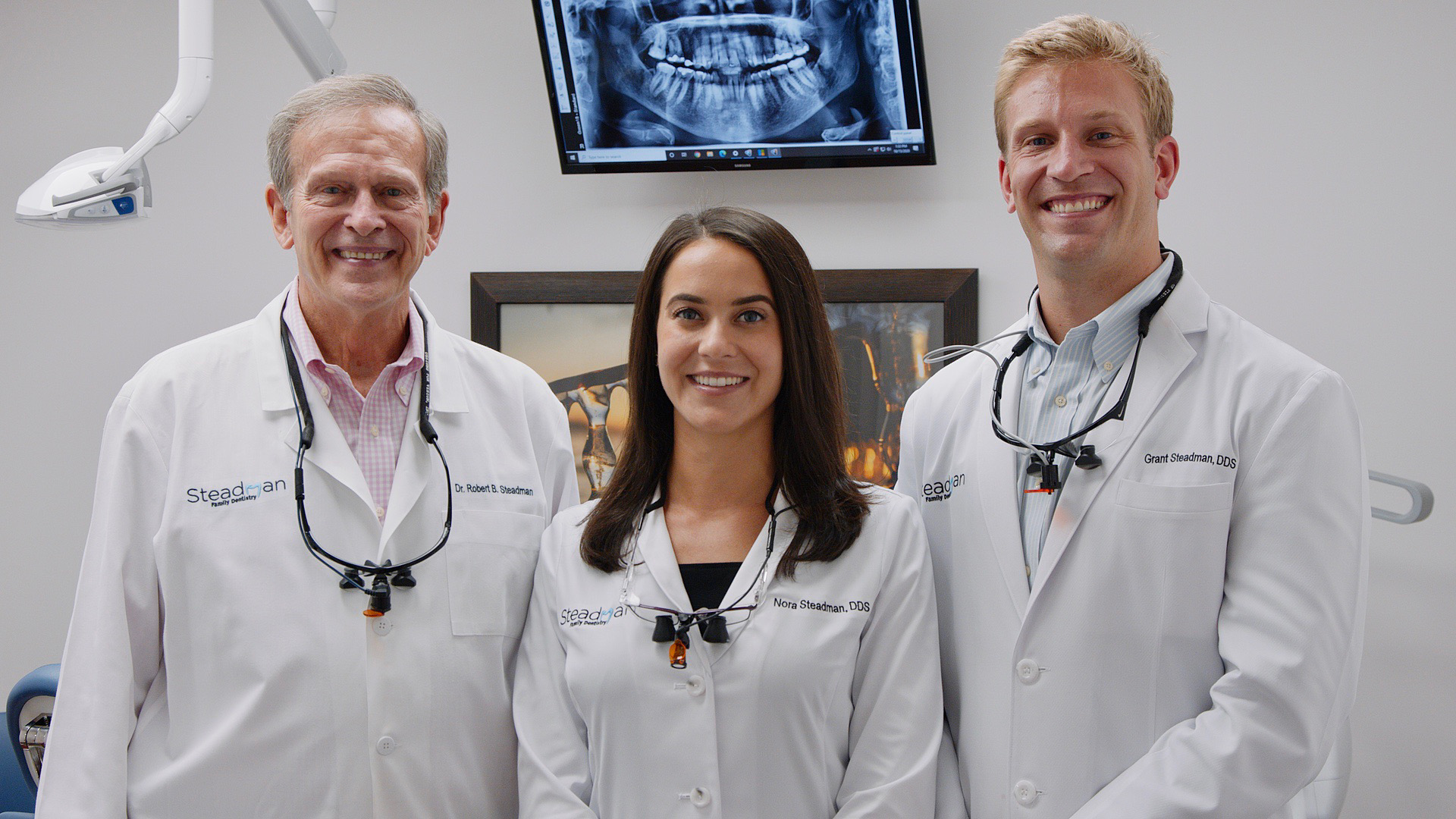
Contact our dental office in Richmond, VA to schedule an appointment with your local dentists, Dr. Robert B. Steadman and Dr. Grant Steadman, today. Call (804) 575-5865 to keep your mouth healthy and catch potential wisdom teeth problems early.